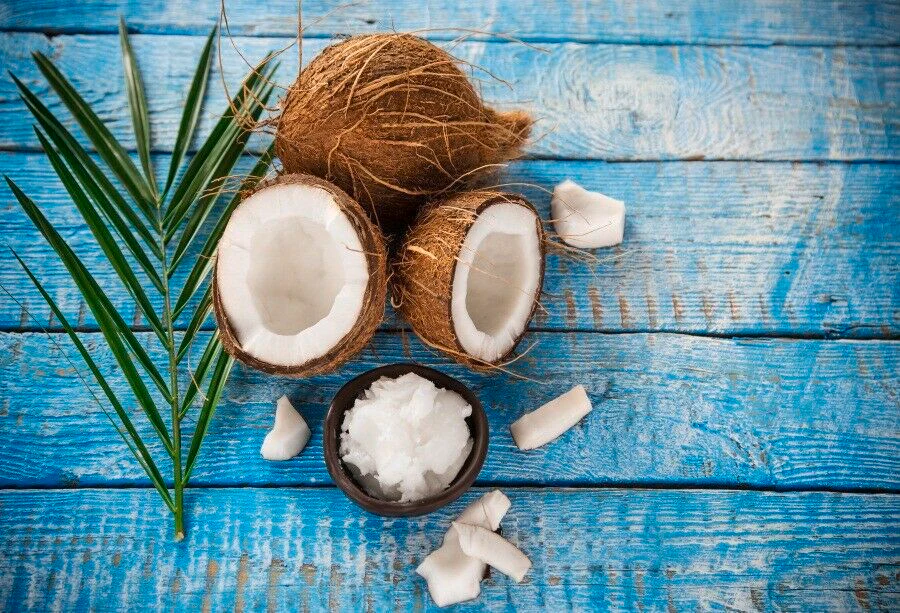
Coconut oil may help reduce hunger, improve oral health, possibly reduce seizures, and more. However, coconut oil may not be great for your heart health.
Coconut oil is an increasingly popular cooking oil.
Many people praise it for its health benefits, including antimicrobial and antioxidant properties, improved skin and oral health, and weight loss potential.
Here are 10 evidence-based health benefits of coconut oil, plus some special considerations to keep in mind if you want to include it in your diet.
1. May encourage fat burning
Coconut oil is a rich source of medium-chain triglycerides (MCTs), a type of saturated fat.
In general, saturated fats are divided into three subgroups, each of which has different effects in your body. These subgroupsTrusted Source are:
- long-chain
- medium-chain
- short-chain
Scientists are studying medium-chain triglycerides (MCTs), including those found in coconut oil, for their potential health benefits.
For instance, a 2023 studyTrusted Source found that MCT supplementation, when used during a low-calorie ketogenic diet, significantly decreased body weight, BMI, and waist circumference.
Since the fats in coconut oil are 65% MCT, it may have fat-burning propertiesTrusted Source that are similar to pure MCT oil.
However, there’s currently no good evidence to say that eating coconut oil by itself will increase the number of calories you burn. More studies on MCT’s weight loss potential are needed.
It’s also important to keep in mind that coconut oil is very high in calories and can easily lead to weight gain if you consume it in large amounts.
2. May work as a quick source of energy
The MCTs in coconut oil provide a quick supply of energy.
When you eat long-chain triglycerides (LCTs)Trusted Source, they’re packaged into molecules called chylomicrons that are transported into your blood via the lymphatic system. Once chylomicrons exit your lymphatic system, they’re taken to your liver and other tissues to be stored or broken down for energy. So getting energy from LCTs take some time.
On the other hand, MCTs are absorbed intact from the small intestine into the bloodTrusted Source and can be immediately used for energy, in much the same way as carbs — your body’s preferred source of energy.
In fact, MCTs have been long used in sports nutrition products for athletes who need a source of energy their body can absorb and use fast.
3. May have antimicrobial effects
Coconut oil has antimicrobial and antifungal propertiesTrusted Source due to its MCT content — specifically, lauric acid.
Lauric acid is a fatty acid that makes up about 50% of the MCTsTrusted Source in coconut oil.
Research suggests it may have antimicrobial effects against disease-causing microorganisms, such asTrusted Source:
- Staphylococcus aureus
- Streptococcus mutans
- Streptococcus pyogenes
- Escherichia coli
- Helicobacter pylori
Studies show that lauric acid may act as a bacteriostatic agent. This is a substance that prevents bacteria from multiplying without killing the bacteria.
It may also act as a bacteriocidal agentTrusted Source, which destroys some bacteria. In addition, it may also inhibit the growth of microorganisms that are harmful to plants.
4. May help lessen hunger
One interesting feature of MCTs is that they may increase feelings of fullness (satiety)Trusted Source and help reduce food intakeTrusted Source.
This may be related to how the body breaks them down. A proportion of MCTs you eat are broken down in a process that produces molecules called ketones.
Ketones reduce appetite by either acting directly on the brain’s chemical messengers or altering the levels of hunger-inducing hormones, such as ghrelinTrusted Source.
You may be familiar with ketones in the context of ketogenic diets, which are quite popular these days. People who are on keto diets don’t eat many carbs, but they do often eat lots of fat. For this reason, their bodies tend to use ketones for fuel.
However, though coconut oil is one of the richest natural sources of MCTs, there’s no evidence that coconut oil itself reduces appetite more than other oils. In fact, a 2017 studyTrusted Source reports that coconut oil is less filling than MCT oil.
5. May help reduce seizures
People have long used keto diets, which are very low in carbs and high in fats, to treat various disorders, including drug-resistant epilepsy in children. They have been shown to help reduce how often seizures happen Trusted Source.
Researchers believe that the lack of available glucose to fuel brain cells is a possible explanation for the reduction in seizure frequency in people with epilepsy on ketogenic diets.
However, overall, there’s a lack of evidence for the use of keto diets in adults with epilepsy, so more research is needed.
Reducing your carb intake reduces the glucose in your blood, and increasing your fat intake leads to significantly increased concentrations of ketones. Your brain can use ketones as an energy source instead of glucose.